Clinical reasoning framework for thoracic spine exercise prescription in sport
- Home
- Blog
Clinical Reasoning

As the link between the lumbar and cervical regions, the thoracic spine is a critical
component of the kinetic
chain during sport. However, it is not well studied in the scientific literature.
This systematic review searched the available literature as well as social media to create a
compendium of
thoracic spine exercises for athletes. The authors categorized the exercises based on four
intended adaptations:
mobility, motor control, work capacity, and strength.
The search resulted in a list of 38 thoracic spine exercises. The list, including intended
adaptation and
additional commentary, can be found in the full text of this paper (freely available).
BACKGROUND AND OBJECTIVE
The thoracic spine is a critical component of the kinetic chain during sport. It serves as
the link between the
lumbar and cervical regions as well as the connection to the upper extremity. It also
provides the majority of
rotational range of motion through the trunk. However, compared to the lumbar and cervical
regions, the thoracic
spine has received less attention in the scientific literature. A previous study classified
spinal exercises
based on four intended adaptations: mobility (i.e. range of motion), motor control (i.e.
stability), work
capacity (i.e. muscular endurance), and strength (i.e. force production capacity) (1). The
purpose of this
systematic review was to create a compendium of thoracic spine exercises for athletes and
categorize the
exercises based on the four intended adaptations.
back’, ‘upper back’, etc. For each exercise that they identified, they categorized it as
either a mobility, motor
control, work capacity, or strength exercise. Within those categories, they also
differentiated between static
and dynamic exercises as well as weight-bearing and partial weight-bearing exercises.
RESULTS
The search resulted in a total of 38 exercises (18 from the scientific literature, 18 from
YouTube, and 2 from
Facebook). The number of exercises per adaptation was 9 (mobility), 7 (motor control), 15
(work capacity), and 7
(strength) (see Table 1).
The intended adaptations and descriptions of all 38 exercises are freely available in the
full text of this
paper. The overall level of evidence was deemed low quality as a result of being derived
mostly from expert
opinion. Several of the exercises are demonstrated in the video.
The thoracic spine provides the majority of rotational range of motion through the
trunk.
METHODS
The authors searched several databases as well as social media for exercises that target the
thoracic spine in
adult athletes. Search terms included ‘thoracic spine’, ‘t-spine’, ‘mid
Proper function of the thoracic spine is likely important for overall spine and upper
extremity performance.
Table 1 – Thoracic Spine Exercises by Adaptation

LIMITATIONS
In addition to the usual databases (PubMed, Google Scholar, etc), the authors expanded their
search to include
social media, which generally is not considered a trustworthy source of evidence. However,
the authors chose this
strategy for two reasons. First, there is a lack of information on thoracic spine exercise
prescription in the
scientific literature. Second, including social media may better represent the breadth of
exercises practitioners
use in the field. Despite their efforts, the authors did acknowledge that their exercise
list is not
exhaustive.
CLINICAL IMPLICATIONS
According to the theory of regional interdependence (2), proper function of the thoracic
spine is important for
overall spine and upper extremity performance. This systematic review produced a useful
compendium of exercises
targeting the thoracic spine. This resource includes the intended adaptation for each
exercise (mobility, motor
control, work capacity, or strength) as well as additional descriptions and commentary for
each exercise.
Practitioners should refer to this adaptation- based list to prescribe thoracic spine
exercises.
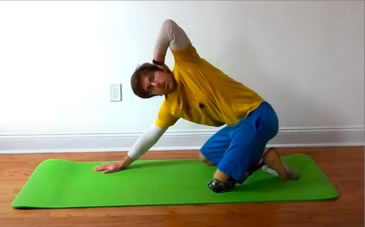
While the included exercises are ostensibly thoracic spine exercises, they do not necessarily
target the
thoracic spine in isolation. Inevitably, the lumbar and cervical spines will be involved to
a greater or lesser
extent depending on the exercise. For some exercises, as athletes improve their kinesthetic
awareness, they may
be able to better target the thoracic region. Many of the included exercises involve the
upper extremity
+ Study reference
(to create a longer lever arm) and/or kneeling postures (to limit motion of the lumbar
spine). As such, some
exercises may be contraindicated for certain patient populations (e.g. early-stage upper
extremity
rehabilitation). In addition, given the limited scientific evidence, practitioners should be
aware that the
effectiveness of these thoracic spine exercises for rehabilitation and injury prevention is
largely unknown.